Burke and Wills not so excellent adventure
Authors: Rodney N & Ivan B
Level: Grade 4 (AusVels level 4)
Length of unit: Approximately 8 - 9 weeks
Learning Focus: This unit has two main aims: to learn about Australian history and to expand students’ understanding of thinking processes by creating a Choose Your Own Adventure based on the Burke and Wills expedition. Students will learn research and reporting skills and Australian historical knowledge through the unit’s focus on Burke and Wills and life in the 1860s. Students will develop greater understanding of the thinking process through exploring how emotions and knowledge can affect decision making processes and outcomes. Through the use of Powerpoint to create a Choose Your Own Adventure students develop their Design, Creativity and Technology skills.
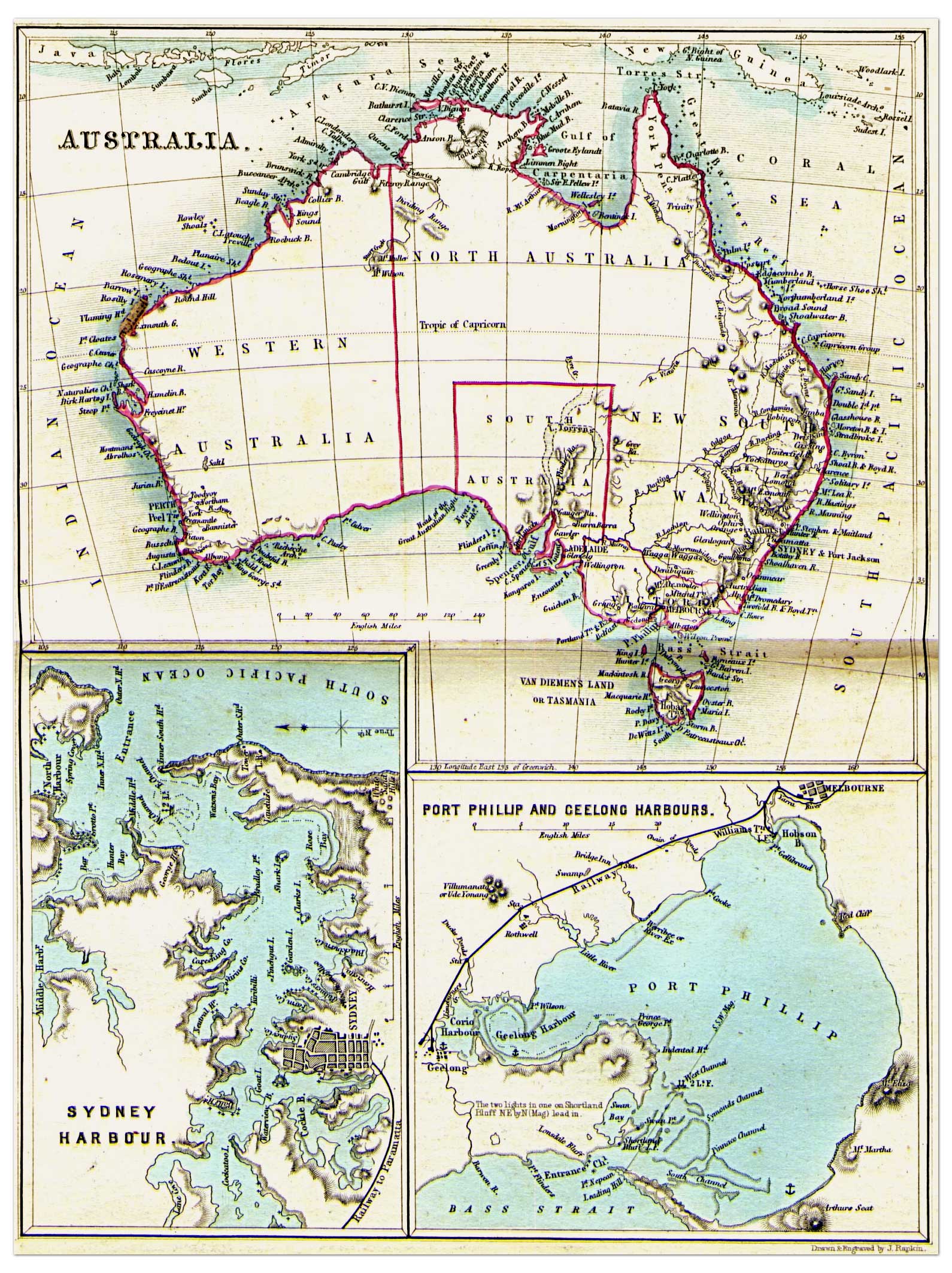
| Web page | Week | Student format | Phase (Kath Murdoch inquiry model) | Weekly focus | Resources General: Images: http://www.effectivemusicministry.com/gebc/scroll-stock.jpg http://www.philatelicdatabase.com/wp-content/uploads/2008/08/map-australia-1860.jpg Both of these images were used for the background. http://www.australiangeographic.com.au/assets/images/article/journal/7227/Burke_and_wills.jpg This image was used for the site banner |
| Home page | Week 1 | Tuning in | Burke & Wills intro | ||
| Task 1 | Week 1 | Tuning in | Rich task introduction
| Images: http://lh4.ggpht.com/-0HDcS1MGA1A/T-Bh5mElVyI/AAAAAAAAPyI/t46s8105HY8/Brave-brave-30839246-450-400%25255B7%25255D.jpg http://en.wikipedia.org/wiki/File:Shrekcharacter.jpg http://3.bp.blogspot.com/-9H2cYGvlXOI/T6iatb5O-fI/AAAAAAAABPw/jahgtADmSio/s1600/link3.png http://images1.wikia.nocookie.net/__cb20100102163020/ben10/images/a/a4/Ben_102.png These images were used to create the 1st task sheet | |
| Task 2 | Week 2 | Finding out | Life in 1860s Australia/pioneering Australia
| Websites:http://www.myplace.edu.au/decades_timeline/1860/decade_landing_14.html?tabRank=1 - A great website for learning about the 1860shttp://www.youtube.com/watch?v=gWr-o5e6ZgA - A fun video with kids acting as explorers. | |
| Task 3 | Week 3 | Finding out | Learning about the B+W story
| Websites: http://www.kidcyber.com.au/topics/bwinfo.htm - A fantastic page for explaining Burke and Wills' story to younger readers. http://en.wikipedia.org/wiki/Burke_and_Wills - A great page for extention students http://ergo.slv.vic.gov.au/sites/default/files/Timeline_Untangle.pdf - A great timeline activity for kids https://maps.google.com/maps/ms?msid=202977755949863934429.0004a6f2bbd29e813fa68&msa=0 - An interactive map so students can see the story step by step and get a sense of the distance travelled. Images: http://en.wikipedia.org/wiki/File:Burke_and_wills_painting_by_longstaff.jpg - By Sir John Campbell | |
| Task 4 | Week 4 | Making connections | Decision making/Thinking processes: How we make decisions in life.
| Images: http://thewaitisover.ca/sample-page/more/ -Decision imaged used from this site to help get students thinking. http://www.holidayrentalcentre.co.uk/assets/images/holiday-beach.jpg - Used on the task sheet | |
| Task 5 | Week 5 | Making connections | Based on their understanding of 1860s Australia and the Burke & Wills story, students create alternative choices and actions for Burke & Wills and how these would affect later events using the fishbone template. Students take into consideration the knowledge and potential emotional states that may have affected Burke & Wills’ decisions. | Website http://ergo.slv.vic.gov.au/sites/default/files/Choose_your_own_adventure1.pdf - A sheet to help students thing about decision making. | |
| Task 6 | Week 6 + 7 | Taking action | Using powerpoint to create a choose-your-own-adventure based on the events and alternative choices.
| ||
| Task 6 | Week 8 | Going further |
| http://en.wikipedia.org/wiki/John_McDouall_Stuart | |
| Task 7 | Week 9 | Reflecting/evaluating | Looking back at your learning experience, what actions/choices have you made that you could have done differently? How would that have affected your your project or learning?
|




MUSIC: (For adventuring purposes - All music is used for educational purposes only)
The Matter is Settled (一件落着) - Pocket Monsters Sound Anime Collection - © Nintendo
Terra’s Theme - Final Fantasy: Distant Worlds Soundtrack - © Square-Enix
Overworld Theme - The Legend of Zelda: Spirit Tracks Original Soundtrack - © Nintendo
Dream of the Shore Bordering Another World - Chrono Cross Original Soundtrack - © Square-Enix
Leap the Precipice - Trusty Bell ~Chopin no Yume~ Original Score - © Bandai Games
Mission Impossible Theme - Mission Impossible: Music from and Inspired by the Motion Picture - © Paramount Pictures
The Bridge Of Khazad Dum - The Lord of the Rings: The Fellowship of the Ring Official Soundtrack - © New Line Cinema
Great Ocean - The Legend of Zelda: Wind Waker Original Soundtrack - © Nintendo
Sky Station Galaxy - Super Mario Galaxy 2 Original Soundtrack - © Nintendo
Fanfare - Final Fantasy IX Original Soundtrack - © Square-Enix
Dimensions of Thinking Processes (AusVels)
Standards in the Thinking Processes domain are organised in three dimensions:
- Reasoning, processing and inquiry
- Creativity
- Reflection, evaluation and metacognition.
Reasoning, processing and inquiry
The Reasoning, processing and inquiry dimension encompasses the knowledge, skills and behaviours required to enable students to inquire into the world around them, and to use critical thinking to analyse and evaluate information they encounter. Students learn to assemble and question information and develop opinions based on informed judgments. They also develop the capacity to transform information into coherent knowledge structures.Creativity
The capacity to think creatively is a central component of being able to solve problems and be innovative. In the Creativity dimension, students learn to seek innovative alternatives and use their imagination to generate possibilities. They learn to take risks with their thinking and make new connections.Reflection, evaluation and metacognition
Learning is enhanced when individuals develop the capacity to reflect on, and refine their existing ideas and beliefs. In the Reflection, evaluation and metacognition dimension, students learn to reflect on what they know and develop awareness that there is more to know. They learn to question their perspectives and those of others. They evaluate the validity of their own and others’ ideas. They also develop their metacognitive skills in planning, monitoring and evaluating their own thinking processes and strategies.Foundation to Level 4 – Laying the foundations
At this stage, students learn discrete knowledge, skills and behaviours that develop their thinking. They make comparisons, identifying similarities and differences; they classify objects according to common properties; they learn about sequences and other patterns; they experiment with cause and effect; and they learn about the link between memory and understanding. These discrete thinking tools form the basis for becoming effective thinkers with respect to more complex patterns and frameworks.
Students build these thinking processes in concrete ways, hence physical representations of ideas and patterns help them to understand, explore, organise and reflect. The seeds of complex thinking processes are apparent in this stage of learning when students are generating questions and seeking answers, experimenting, employing trial and error, and drawing on existing knowledge to understand a new task. They are beginning to understand that complex thinking may lead to a change of viewpoint.
Humanities - History (AusVels 3-6)
Levels 3 – 6
Curriculum focus: Local/national history and use of a range of sources
Students draw on their growing experience of family, school and the wider community to develop their understanding of the world and their relationship to others past and present. In these levels, students begin to better understand and appreciate different points of view and to develop an awareness of justice and fair play.This history curriculum seeks to target the distinct nature of learners in Levels 3 – 6 by including content about Aboriginal and Torres Strait Islander societies, democratic concepts and rights, and the diversity of Australian society.
In this way, students develop an understanding of the heritage of their community and of their ability to contribute to it. They become aware of similarities and differences between people and become more aware of diversity in the wider community as well as the concept of change over time.